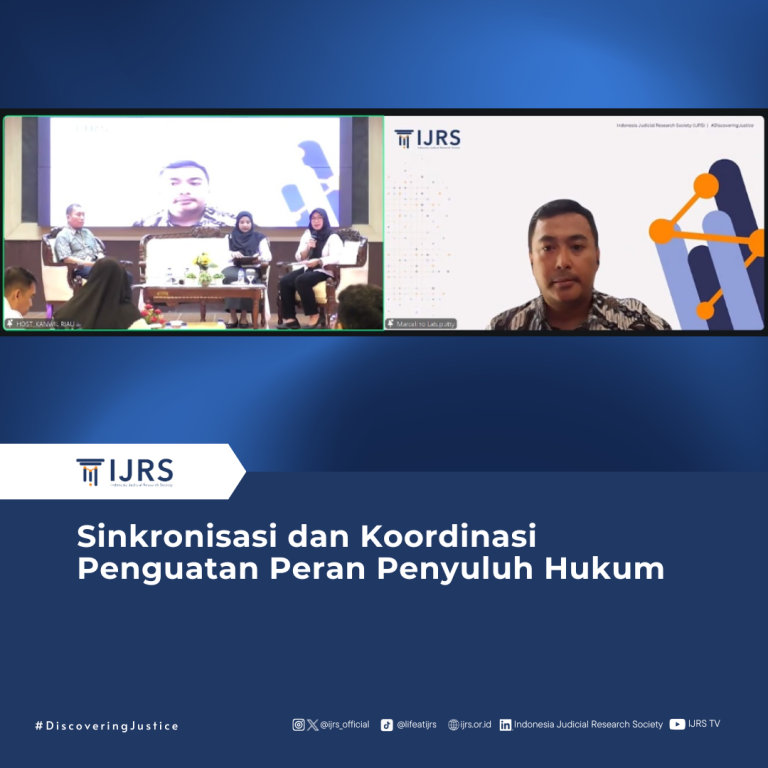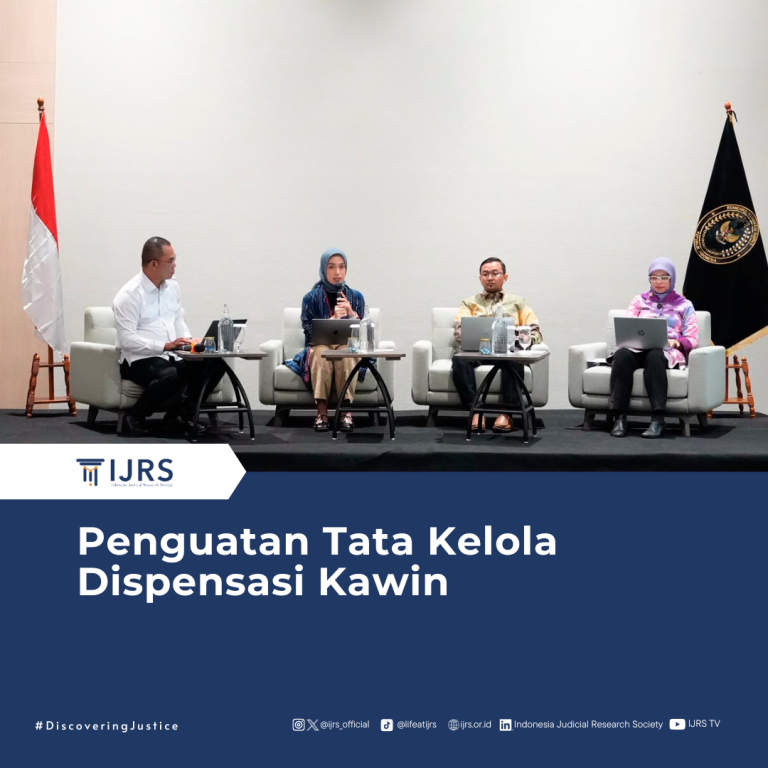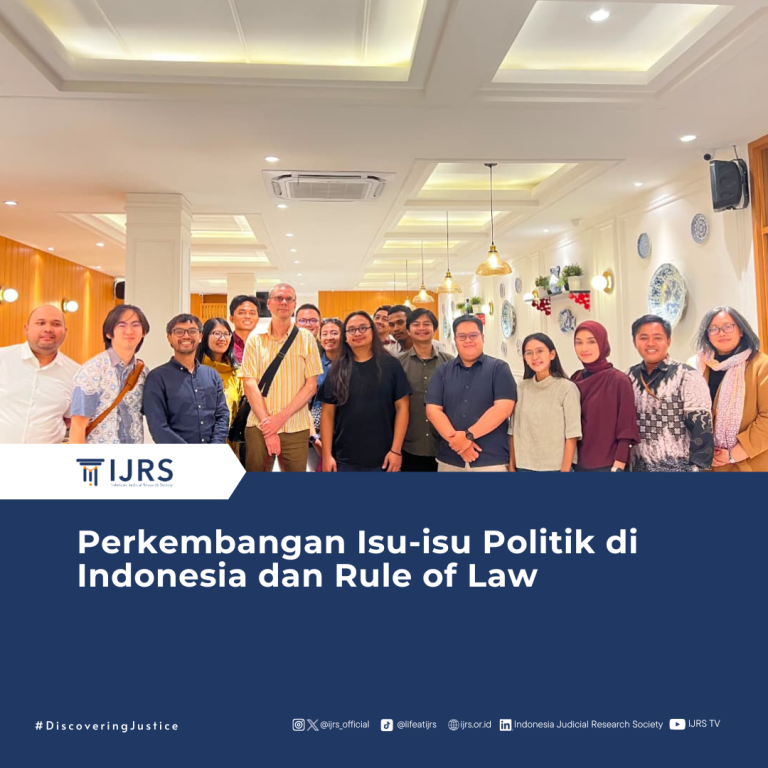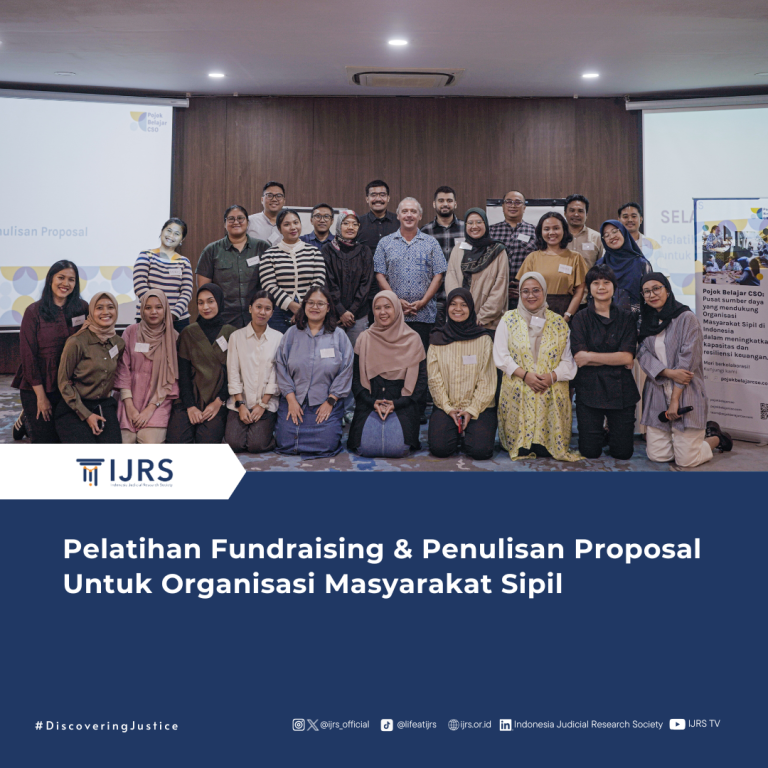


On July 29, 2026, Gladys Nadya Arianto (IJRS Researcher) had the honor of presenting at the ASEAN Human Rights Index Consultation 2026, delivering a session Exploring Data Availability, Measurement Approaches and Emerging Opportunities for Human Rights Assessment.
Gladys presentation explored how abstract concepts such as justice and human rights can be translated into objective, quantifiable measurements, drawing on Indonesia’s experience developing two national indices that have become key references for government policy:
-
Access to Justice Index (A2J): the first index in Indonesia to comprehensively measure the community’s justice journey, now embedded in the RPJMN 2020–2024 and SDG 16.3.3.
-
Legal Development Index (LDI): a composite index tracking national legal development across five pillars, now integrated into the RPJMN 2025–2029 as part of Indonesia’s legal reform agenda.
Both indices are built on a composite data architecture combining administrative data, expert interviews, and public surveys, a model particularly relevant for ASEAN, where Member States possess varying data capacities.
The session also addressed a central question: does ASEAN need a regional Human Rights Index? We argued that it does, provided the index is contextual, rights-sensitive, and does not rely on quantitative scores alone. Key challenges at the regional level include data quality disparities, methodological consistency, institutional neutrality, and the region’s limited human rights instruments.
Building on this, IJRS put forward four foundational recommendations for a future ASEAN Human Rights Index: ensuring data availability through a phased approach, securing early cross-country commitment, adopting a clear “Structure–Process–Outcome” conceptual framework, and anchoring indicators in existing international references such as the OHCHR Global Human Rights Indicator Framework (GHRIF), OHCHR Human Rights Indicators Guide, SDG 16, and Human Rights-Based Approach to Data (HRBAD).
We thank AICHR for convening this important dialogue and for the opportunity to contribute to the development of a regional framework that is evidence-based, inclusive, and responsive to the diverse realities across ASEAN Member States.